Building Thriving Communities:
Why Educator Wellbeing is the Foundation of Jewish Early Childhood Excellence
February marks both Black History Month and Jewish Disability Awareness, Acceptance, and Inclusion Month (JDAIM), twin observances that call us to examine how we build communities where every person can thrive. This convergence offers Jewish early childhood leaders and funders a crucial opportunity to reflect on a question central to both equity and excellence: How do we create environments where educators flourish so that children and families can flourish alongside them?
The Hidden Epidemic in Our Classrooms
Former U.S. Surgeon General Vivek Murthy has identified loneliness as a defining public health crisis of our time, with social disconnection increasing risks for depression, anxiety, heart disease, and premature death on par with smoking 15 cigarettes daily (UCLA Health). While Murthy's warning addresses society broadly, it holds particular urgency for early childhood education, where both educators and the families they serve face profound isolation.
In our recent conversation with Elliot Haspel, author of Raising a Nation, we explored how families raising young children often describe fragmented social ties and experiences of isolation stemming from competing work and family demands (Elevated). Jewish early childhood centers hold unique potential to address this crisis, they are places where meaningful connection, belonging, and shared purpose can take root. But this potential can only be realized when educators themselves have the psychological safety and support to bring their full selves to this sacred work.
The research is unambiguous: nearly half of early childhood educators are experiencing high levels of burnout and stress (K-12 Dive), and attrition among early childhood educators is nearly 3.5 times higher than K-12 educators (Huskie Commons). When we lose educators to burnout, we lose more than experienced staff. We lose the continuity of relationships that anchor children's development, the institutional knowledge that strengthens programs, and the communal bonds that transform early childhood centers from service providers into community cornerstones.
Psychological Safety: The Foundation We Must Build
Harvard Business School professor Amy Edmondson has spent decades researching what enables teams and organizations to perform at their highest levels. Her conclusion is clear: psychological safety is consistently one of the strongest predictors of team performance, productivity, quality, creativity, and innovation (McKinsey).
Edmondson describes psychological safety as creating interpersonal ease where people can share information and be transparent, noting that uncertainty and interdependence are attributes of most work today, and without an ability to be candid, to ask for help, and to share mistakes, we won't get things done (Harvard Business School).
For early childhood educators, this means creating workplace cultures where:
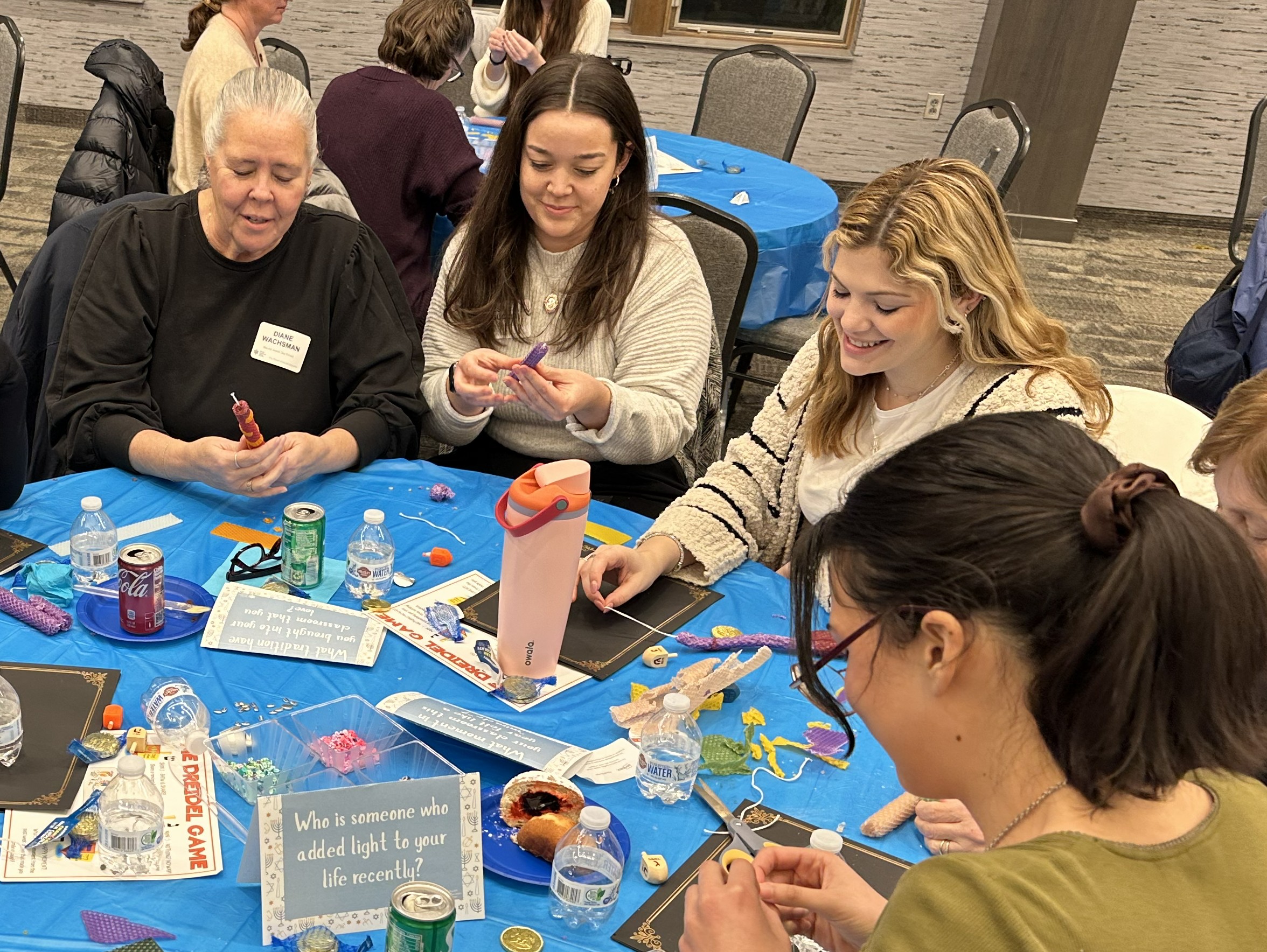
In ElevatEd's recent professional development session with Amy Dolgin, Director of Wellness and Integrated Learning for URJ Camps, directors explored practical strategies for building this foundation. The insights were clear: psychological safety isn't about being nice or avoiding difficult conversations. It's about creating structures, setting clear expectations, and modeling the behaviors that enable everyone - educators, children, and families - to thrive.
From Crisis to Opportunity: What Funders and Leaders Must Understand
The early childhood workforce challenge is not primarily about recruitment—it's about retention and wellbeing. Research shows that educators experience stress when they have limited resources but face high expectations for quality.
This matters profoundly for three interconnected reasons:
First, educator wellbeing directly impacts child outcomes. When educators are emotionally exhausted, they engage less frequently in the educational activities that drive learning and development; including the joyful Jewish experiences that spark curiosity, the meaningful rituals that build identity, and the values-rich conversations that shape character. Put simply: we cannot expect burned-out educators to create the responsive, nurturing Jewish environments young children need to thrive.
Second, workforce stability is inseparable from program quality. As Haspel emphasized in our conversation, without a stable educator workforce, quality programs are impossible because turnover disrupts the child-caregiver relationships that are central to early learning. Every time an educator leaves, we reset relationships not just with children but with families who depend on those connections for their own sense of belonging and place within the Jewish community.
Third, this is a Jewish communal imperative. Research shows that parents who form Jewish peer groups through their child's ECE center are more likely to be actively engaged in Jewish life in the future (Yale School of Management). Most families that choose Jewish ECE increase their Jewish practice, such as celebrating Shabbat and holidays and participating in Jewish ECE events, often with friends whom they meet at the Jewish ECE program (Psychology Today). When workforce instability leads to program closures or diminished quality, families seek care elsewhere, and we lose this critical gateway. Early childhood represents a formative moment when families are actively seeking connection and meaning; if we cannot offer stable, high-quality Jewish programs during this window, we risk losing them to non-Jewish alternatives during the very years when Jewish identity and community bonds are being established.
Four Strategic Shifts for Community Leaders and Funders
Based on research and ElevatEd's work across Jewish communities, we recommend four evidence-based approaches:
| 1. Invest in Proactive Wellbeing Infrastructure |
Community leaders and funders should:
|
Directors should:
|
Community leaders and funders should:
|
Directors should:
|
Community leaders and funders should:
|
Directors should:
|
Community leaders and funders should:
|
Directors should:
|
A Call to Action
This February, as we honor the ongoing work of racial justice and disability inclusion, let us recognize that creating truly inclusive, equitable Jewish early childhood communities requires us to attend to the wellbeing of those who make this work possible every day.
We stand at a crossroads. We can continue treating educator burnout as an inevitable cost of doing business in early childhood education, accepting high turnover and diminished quality as normal. Or we can recognize that we need to reinforce the caring, supportive institutions, communities and relationships that give our lives purpose and meaning (Office of the Medical Investigator). This means embodying the Jewish values we aspire to teach: chesed (loving-kindness) in how we support our educators, kavod (dignity) in how we compensate them, and kehillah (community) in how we build institutions that sustain everyone who gathers there.
Jewish early childhood centers, at their best, are places where educators, children, and families find meaning, purpose, and belonging together. But we can only realize this potential if we build them on a foundation strong enough to support everyone who gathers there. We stand at an inflection point: we can continue with incremental adjustments while losing educators to burnout, or we can fundamentally redesign how we support this workforce. The latter requires significant investment, but the cost of inaction, to program quality, educator wellbeing, and Jewish communal vitality, is far higher.